Carbon Connects
Reducing Greenhouse Gas Emissions from Peat
Number of days
-
Online Open Day
19 March
-
Location Velp
31 January



Reducing Greenhouse Gas Emissions from Peat
Online Open Day
19 March
Location Velp
31 January
Online Open Day
19 March
Location Velp
31 January
Reducing Greenhouse Gas Emissions from Peat
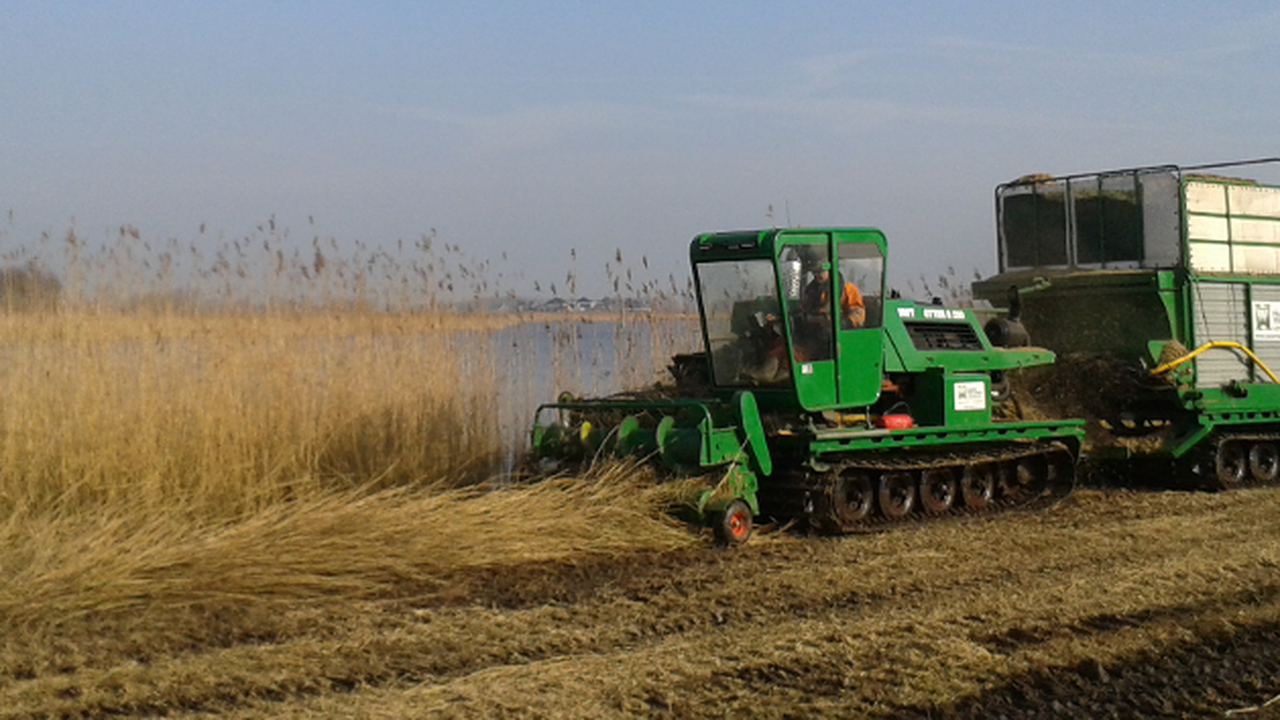
Carbon Connects is a project within the Interreg North-West Europe programme. The primary focus of the project is to restore peatlands. Initially, the project was supposed to last four years, starting in 2018, but it has been extended until December 2023 with an additional work package.
Worldwide, more than 550 gigatonnes of carbon is stored in peatlands. This is equivalent to 75% of all carbon in the atmosphere and is twice the amount of carbon stored in forests. The degradation of peatlands results in carbon emissions, but at the same time, the restoration of peat can help to avoid emissions.
To make restoration projects and sustainable agriculture economically feasible, external funding is needed. Therefore, the aim of Carbon Connects was to reduce greenhouse gas emissions from peatland drainage while proposing new, realistic business models for the use of peatlands. With partners from Belgium, France, Germany, Ireland, the Netherlands, and the United Kingdom, the project established ten pilot sites in North-West Europe to test ideas and measure effects.
After four years, the project was extended with a capitalization phase, focusing on providing new financial ideas to facilitate peatland restoration. Many private companies could invest in peatland restoration to achieve their carbon emission targets. Often, the network, financial mechanism, and a sufficiently solid framework to certify carbon credits are lacking. During the project, a Market Accelerator Board was established to initiate dialogue on this subject. With this approach, the Carbon Connects project has created a direct link between investors, intermediaries, advisors, and peatland managers/owners.
Duration: 2018 - 2023
Project partners: The Rivers Trust, VLM, ILVO, European Landowners Organization, AC3A (Association of the Chambers of Agriculture of the Atlantic Area), Phillipps University Marburg, Durham County Council, Technological University of the Shannon, Radboud University, Wear Rivers Trust, Aa en Maas Water Board, Van Hall Larenstein University of Applied Sciences