What is the case?
Connecting agriculture and nature is an important challenge. This challenge is faced by individual farmers, the 40 collectives in which farmers collaborate, chain partners, and a wide range of stakeholders. Challenges exist in operational management, business operations, revenue models, and relationships with organizations and governments—in other words, on ecological, economic, social, and institutional levels. Within the Netherlands, there can be significant differences between areas in the challenges they face. This means that the general set of success and failure factors known from research does not necessarily apply integrally to each area. A translation from general to area-specific is required.
What is the project doing about it?
In this project, we are developing a set of concrete, practical tools for organizations in a region to translate general success and failure factors into specific opportunities and bottlenecks in the context of an area (designed and tested in practice). Based on this, a number of goals are formulated with and for regional partners. With the practical partners in the cases, we are developing a multi-year action plan that works to leverage opportunities and address bottlenecks as effectively as possible. Because the cases are spread across the Netherlands, a wide range of experiences is generated from which we can learn. We translate these experiences into practice-oriented, applicable knowledge and products for practice and education.
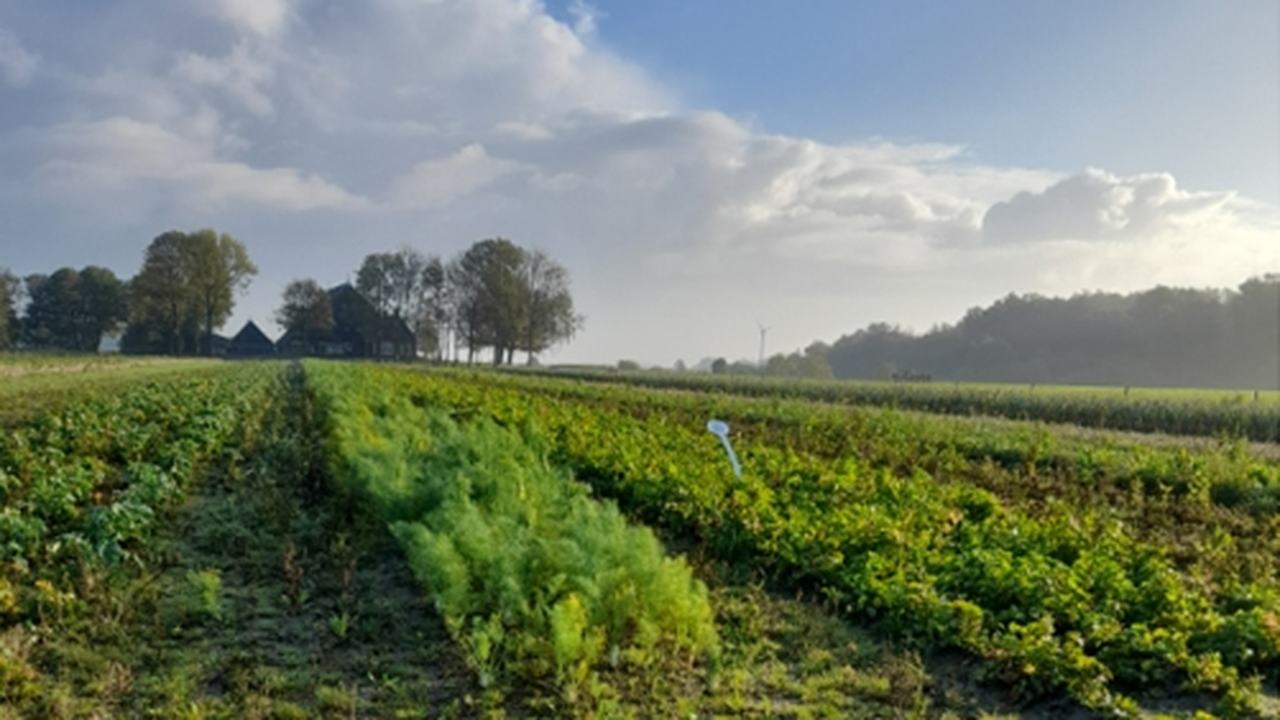
Van Hall Larenstein University of Applied Sciences is involved in regional cases in Northern Netherlands and the Achterhoek. In Northern Netherlands, we collaborate with three agricultural businesses: the regenerative farm Botmas, the arable farm Van der Bos within the association Ecolana, and the dairy farm Veenstra in the Northern Frisian Woodlands. In Gelderland, we focus on the IJssel floodplains within the Climate Park IJsselpoort (Natura 2000 area), including two dairy farms (Elzenbroek Farm, IJsseloord Dairy Farm) and a mixed farm (De Koningspleij Firm). At the regional level, we look at the Municipality of Bronckhorst and the innovation farm ‘de Marke’ of Wageningen-UR.
What does the project deliver?
- Concrete, practical tools for organizations in a region.
- Translation of success and failure factors into specific opportunities and bottlenecks for a region.
- A multi-year action plan (‘transition paths’) for the companies and regions.
- Translation of knowledge and experiences into practice and education.